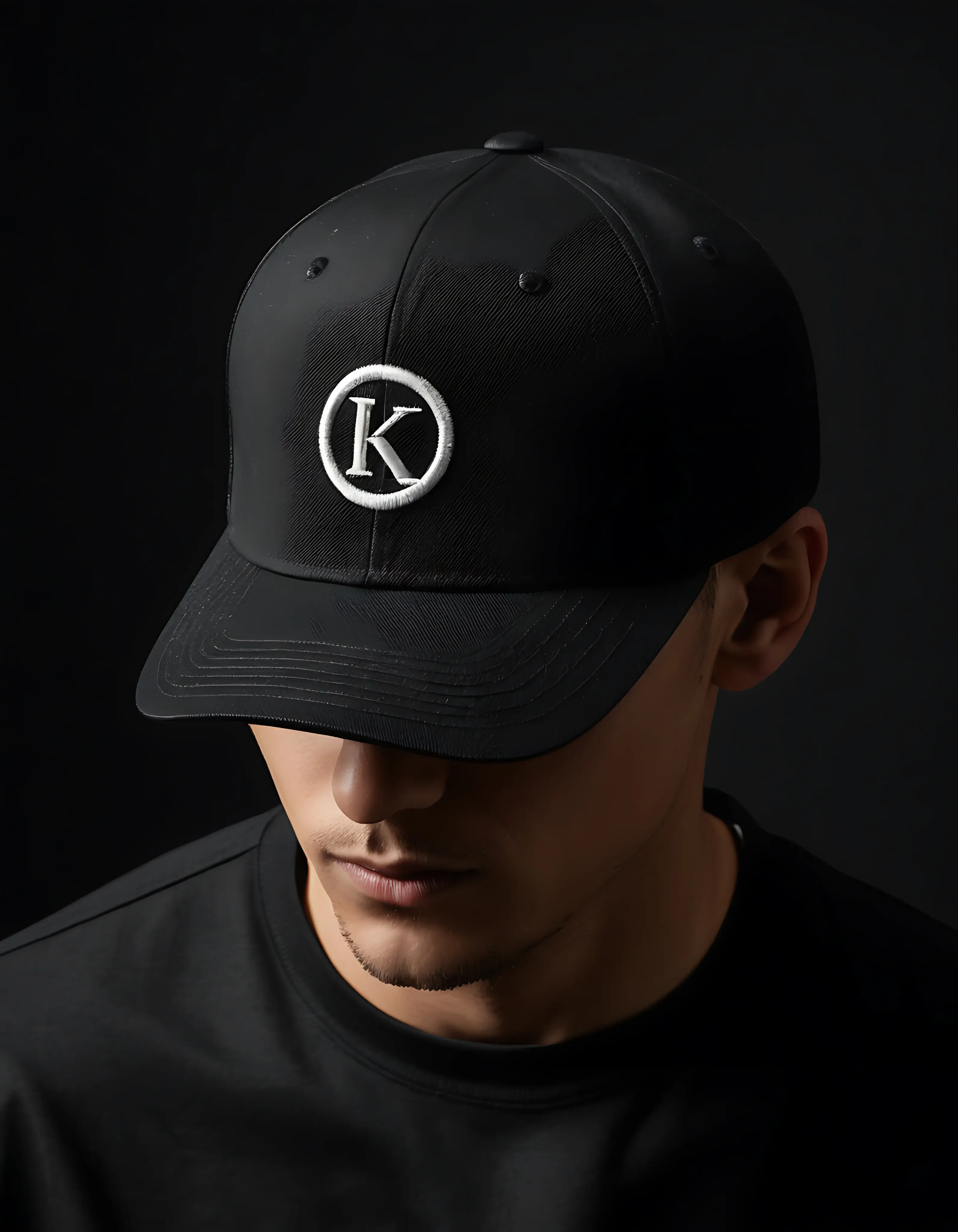
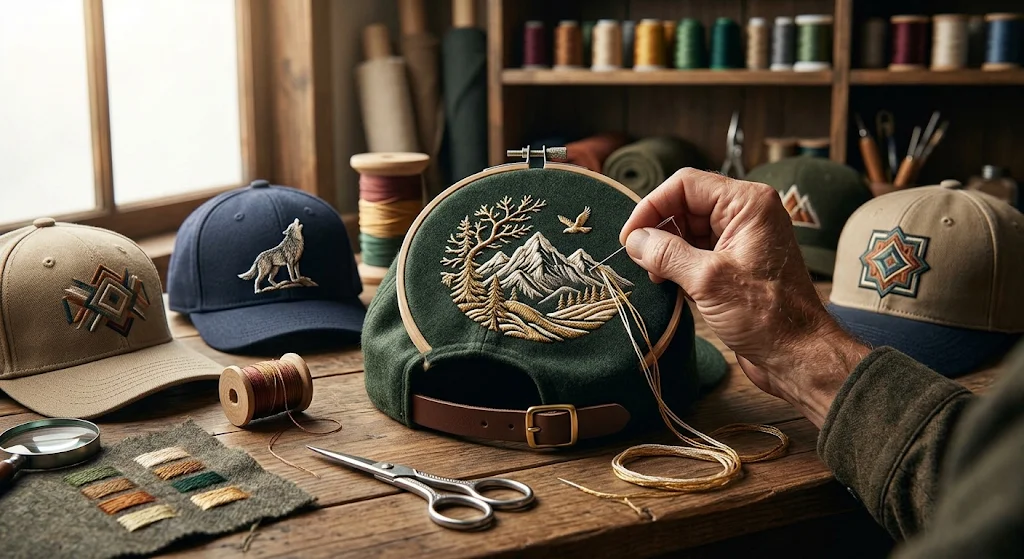
A premium cap can make an impression in just a second because of design, it gets noticed, but raised and textured ones hold attention. Premium embroidered caps do their job in getting the spotlight because their logos are stitched with thread rather than printed with ink.
We have written this guide to explain why embroidery suits premium caps, its downsides and how to prepare artwork for clean stitching.
What Makes a Cap Look Premium?
A premium cap, well structured with a high-quality stiffened lining, stays in shape, wears comfortably and carries neat logos. choice of fabric for caps and the production process do most of the work, and the rest is covered up by the designs that grab attention, so the two need to complement each other.
What Are Premium Embroidered Caps?
The designs are stitched directly onto the custom premium cap panels, are raised and have a textured surface. They work as branding and fashion wear, as they are durable and withstand daily wear well.
Thread sits in the fabric
Printed designs sit flat with no texture, but embroidery changes things. The plain designs are made directly with thread, which makes them part of the cap.
Raised texture
Have raised texture that can be seen and felt when you touch the design, which makes embroidered caps look premium and fashionable.
A stiff front panel
They have a sturdy front panel with a sleek, smooth shape and do not get slouched even if you take them off.
Embroidery vs Printed Caps
Here is a table laid out for you to differentiat between embroidered and printed caps. It also explains how embroidered caps make an impact over the printed caps.
| Method | How it looks and feels | Suits | Watch out for |
| Flat embroidery | Smooth, stitched and slightly raised | Clean logos and short text | Thread cannot blend colours, and very small text can fill in |
| 3D puff embroidery | Raised, with foam under the stitches | Bold letters and simple shapes | Fine detail gets lost |
| Woven patch | A flat fabric badge sewn on | Logos with more detail than direct stitching can hold | It sits on the cap as a separate piece |
| Sublimated finish | Dyed into the fabric with heat, with no texture | Full-colour artwork and gradients | No raised, stitched look |
Which Cap Styles Take Embroidery Best?
Different cap styles hold the embroidery in a unique way. The following table will help you understand which cap style the embroidery suits better, with a tip for each.
| Cap style | How it holds embroidery | Tip |
| Structured six-panel | Firm front keeps stitches flat | Keep thin lettering off the centre seam |
| Five-panel | One smooth front panel with no centre seam | Check the fabric can handle dense stitching first |
| Unstructured | Soft crown with a relaxed, low-profile look | Stick to a small, simple logo |
| Trucker-style | Solid front panel with a mesh back | Keep the design on the solid front, not the mesh |
What is 3D Puff Embroidery?
Uses a foam layer under the stitches, so the design looks 3D because it stands up from the base, which suits streetwear and sports caps.
Where Puff Works Well
- Short names and initials
- Bold logos and block letters
- Club badges and simple designs
- Designs that need a raised, eye-catching look
- Logos that should stand out from a distance
Where Puff Struggles
- Thin lines and fine details
- Small text and tiny lettering
- Complex designs with tight spaces
- Logos with too many small elements
- Designs that need sharp, precise details
How Do You Prepare Artwork for Cap Embroidery?
Preparing the artwork for a embroidery caps is easy. You have to look out for the following things.
- The design should be in a vector file, such as AI or SVG, because it scales up without blurring.
- Cut out shading, thin outlines and small details in the design.
- Check the text height because letters under about 6 mm tall tend to fill in and become hard to read.
- Since each colour is a separate thread and cannot blend into a gradient, that is why, choose solid colours.
- A six-panel cap has a seam on the front, so do not add thin letters or pick a five-panel cap.
- Review colours, spelling, and small details in mockup.
When Embroidery Is Not the Right Choice?
Embroidery may not work well for photos, gradients, or tiny text because these details can become blurry or disappear on a small cap.
- Small letters can blur together, so do not use tiny text.
- Photo and gradient details are harder to stitch.
- Seams can affect design placement, so check cap panels.
- Confirm the details before production in your mockup.
How Do You Care for an Embroidered Cap?
Spot clean first, hand wash in cool water if needed, and let the cap air dry on a rounded shape. Gentle care protects the stitching and stops the peak, the stiff brim at the front, from bending out of shape.
- Read the care label inside the cap and follow it if it differs from these steps.
- Spot clean with a damp cloth and a little mild soap.
- Hand wash in cool water if the cap needs more than a spot clean, and avoid wringing the peak.
- Dry it over a rounded shape, such as a bowl, so the crown keeps its form.
- Keep it away from tumble dryers and radiators, because strong heat can warp the peak.
Frequently Asked Questions
Can I order just a few embroidered caps?
You can order as just few patches for a test run.
Can embroidery go on the side or back of a cap?
Yes, it can go anywhere on the cap and you can check if it looks good on the mockup.
Will embroidery match my brand colours?
Yes, we match the closest thread colour to your design.
How long does embroidery last on a cap?
Embroidery lasts longer than print as it is made of thread and does not peel.
Can I combine embroidery with a patch?
Yes, you can add patches to an embroidered cap for a personalised look.
What file should I send for cap embroidery?
A vector file, such as AI or SVG, is ideal because it scales without blurring.
Choosing Embroidery for Your Premium Caps
The right embroidery can turn a simple cap into a standout accessory. Bold logos, quality materials, and neat stitching all contribute to a polished finish. Keep your artwork simple, consider the cap’s shape, and choose details that reflect your brand’s style.
