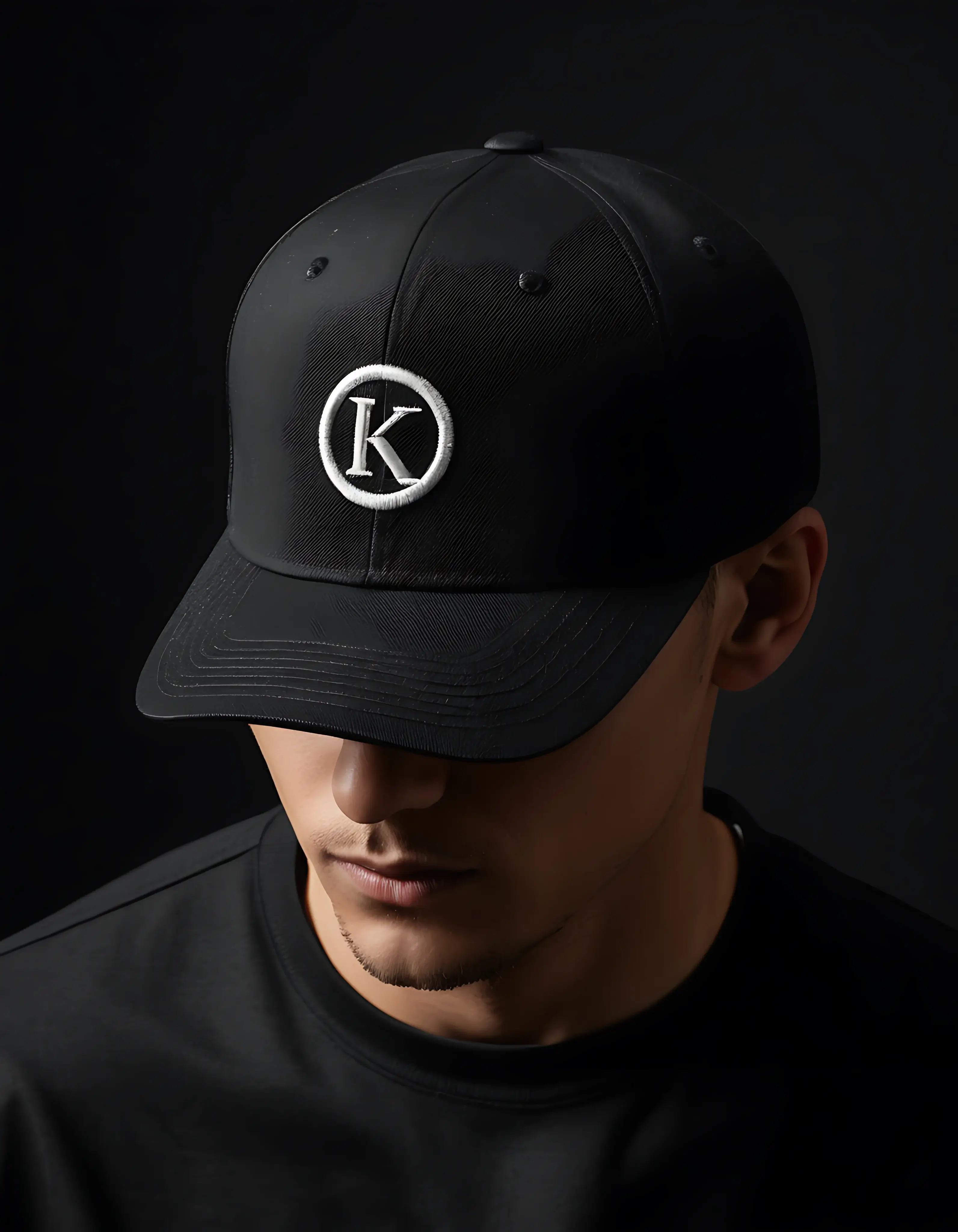
Branded headwear is one of the most-worn promotional items a business can invest in. A cap goes to the gym, the school run, the pub, and the office, carrying your logo further than almost any other piece of merchandise you could hand out.
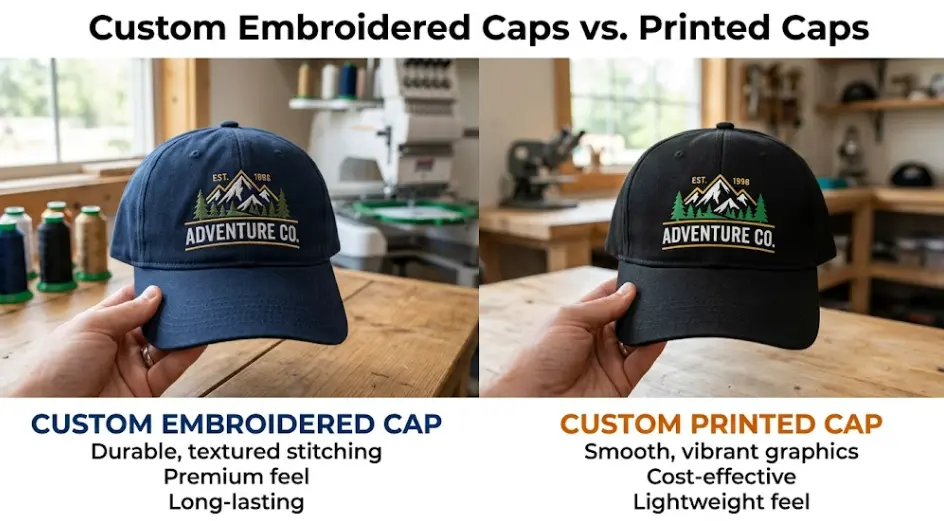
But before a single cap leaves the factory floor, one decision shapes everything else about the finished product: how the logo actually gets onto the fabric. Custom embroidered caps vs. printed caps are the two dominant decoration methods for custom caps, and they are not interchangeable.
They differ in cost, in how long the branding survives daily wear and washing, in how much fine detail they can capture, and in how premium the end result looks and feels. Choose the wrong one, and you either overspend on a giveaway item that only needed to last a single event or you underspend on a uniform piece that starts peeling after a few weeks in the rain.
This guide breaks down exactly how embroidered branding and printed branding work, compares them head to head across the factors that matter most to a buyer, and walks through real scenarios so you can choose with confidence rather than guesswork.
By the end, you should know precisely which route suits your logo, cap decoration methods, your budget, and your brand.
What Is Embroidered Branding?
Embroidery is the process of stitching a logo directly into the fabric of the cap using coloured thread. A digitised version of the artwork is loaded into an embroidery machine, which then builds the design stitch by stitch, layer by layer, until the logo sits raised above the surface of the custom cap.
How it works
The embroidered cap design first goes through digitisation, converting the artwork into a stitch file the machine can read. Stitch counts vary depending on the size and complexity of the logo, but a typical cap logo runs anywhere from 5,000 to 15,000 stitches.
Very small text, thin outlines and fine gradients tend to lose clarity once stitched, since thread has a physical width that flat printing does not. This is why embroidery specialists generally recommend a minimum text height and a simplified colour palette, usually capped at eight to twelve thread colours, to keep the design crisp.
Best-suited materials and cap styles
Embroidery works well on structured, mid-weight fabrics that can hold stitching without puckering. Cotton twill, wool blends, brushed cotton and structured five and six-panel caps are the classic choice. It is far less suited to very thin, stretchy or slippery fabrics such as some performance mesh caps, where stitching can distort the material.
Visual and tactile qualities
The defining feature of embroidery is texture. The thread sits proud of the fabric, giving the logo a raised, almost sculpted quality that you can feel with your fingertips as well as see. This tactile dimension is a large part of why embroidered branding is associated with a premium, established look, the sort you would expect on a corporate uniform, a golf cap or a client gift rather than a one-off giveaway.
What Is Printed Branding?
Printing applies the logo to the surface of the fabric using ink or a transferred image, rather than building it from thread. Several printing methods are used on custom branded caps, each with different strengths.
Common printing methods
Screen printing pushes ink through a fine mesh stencil directly onto the fabric and remains the most common method for simple, bold designs with a small number of solid colours.
Heat transfer applies a pre-printed design to the cap using heat and pressure, useful for small runs or highly detailed artwork. Sublimation dyes the fabric itself, producing a permanently vibrant, fully wrapped design, though it only works on polyester and similar synthetic fabrics.
Direct-to-film printing, commonly known as DTF, prints the design onto a special film before transferring it onto the cap and has become popular for its ability to reproduce photorealistic detail and gradients on almost any fabric type.
Best-suited materials and use cases
Printing suits lightweight, smooth fabrics such as polyester, performance mesh and cotton blends where embroidery might be too heavy or bulky. It is the natural choice for event caps, sports team merchandise, retail products and any run where the design includes fine detail, small text, gradients or photographic elements.
Visual qualities
Printed logos sit flat against the fabric rather than raised from it. This makes printing the far better option for capturing gradients, shading, fine linework and multicolour artwork that would be impossible or prohibitively expensive to replicate in thread.
The trade-off is that printed designs generally read as more casual and less tactile than embroidery, which matters for brands positioning themselves at the premium end of the market.
Head-to-Head Comparison
| Factor | Embroidery | Printing |
| Durability / wash resistance | Excellent, often outlasts the cap itself | Good, but can crack, fade or peel over repeated washing depending on the method. |
| Cost per unit (low volume) | Higher, due to digitisation and setup | Lower, especially for heat transfer or DTF |
| Cost per unit (high volume) | Becomes more competitive as setup costs are spread out | It remains low; screen printing scales very efficiently |
| Turnaround time | Slower, digitisation adds lead time | Generally faster, particularly for heat transfer and DTF |
| Design complexity | Limited with fine detail, gradients and small text | Excellent for gradients, photorealistic and highly detailed designs |
| Perceived brand value | Premium, tactile, associated with quality | Casual to mid-range, vibrant and eye-catching |
| Best for | Corporate uniforms, client gifts, retail flagship products | Event giveaways, sports merchandise, one-off runs, detailed logos |
Which One Fits Your Brand?
The right answer depends less on personal preference and more on what the cap actually needs to do for your brand.
If you want a premium, long-lasting look for client gifts, staff uniforms or a flagship retail product, embroidery is almost always the better investment. Embroidered caps UK survive years of washing and wear, and the raised texture signals quality before anyone even reads the logo.
If you need vibrant, highly detailed designs on a limited budget or you are producing caps for a single event, baseball caps for a sports fixture or a short marketing campaign, printing is typically the smarter route. Printed caps UK handle gradients and fine detail that embroidery cannot and usually cost less for smaller runs.
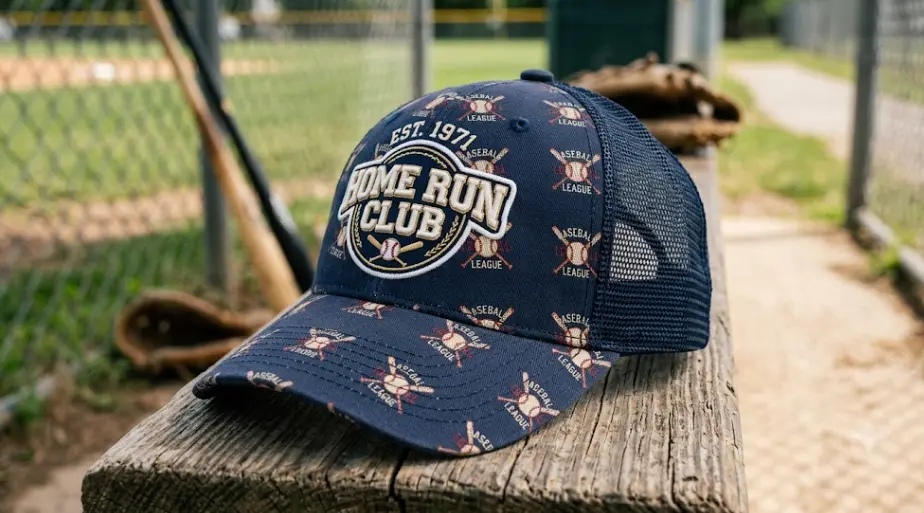
There is also a middle path worth considering. Hybrid embroidered printed caps combine both methods in a single product, for example, an embroidered front panel carrying the main logo alongside a printed side panel or under-brim carrying a slogan, website address, or secondary graphic.
This approach allows brands to maintain the premium embroidered look where it matters most while still utilising printing for intricate details that thread cannot achieve. By merging these two techniques, brands can create a versatile product that appeals to a wider audience, catering to both aesthetic preferences and functional needs.
Furthermore, this hybrid method not only enhances the visual appeal of the caps but also offers a unique opportunity for storytelling through design. The embroidered elements can evoke a sense of tradition and craftsmanship, resonating with consumers who value quality and heritage, while the printed components can introduce modernity and creativity, capturing the attention of a younger demographic.
Moreover, the use of hybrid caps can also lead to cost efficiency in production. By strategically selecting which elements to embroider and which to print, brands can optimise their manufacturing processes, potentially reducing labour costs and material waste.
This, in turn, can allow for greater flexibility in pricing strategies, making these caps more accessible to a broader market. In essence, the hybrid cap design not only stands as a testament to innovative manufacturing techniques but also reflects the evolving landscape of consumer preferences, where personalisation and versatility are increasingly paramount.
As brands continue to explore this middle path, they will likely discover new ways to connect with their audiences, blending traditional craftsmanship with contemporary design sensibilities to create products that truly resonate in a competitive marketplace.
Common Mistakes to Avoid
Several avoidable errors come up repeatedly when brands choose a decoration method without proper guidance.
Choosing printing for a logo with fine detail or small text and expecting the same crispness embroidery gives on a solid block colour design is impractical when, in practice, printing and embroidery each have their own strengths that do not simply substitute for one another.
Choosing embroidery for a gradient-heavy or photographic logo, only to find the finished caps flatten the design into blocky, simplified colour segments that lose the subtlety of the original artwork.
Overlooking minimum order quantities before committing to a method, since embroidery setup costs mean very small runs can carry a disproportionately high price per unit compared with printing.
Ignoring fabric compatibility, particularly with sublimation printing, which only works properly on polyester and similar synthetic materials rather than natural fibres such as cotton. Buying embroidered caps or ordering printed alternatives? Choose wisely based on the material, design, and expected usage.
Cost Breakdown Example
Costs vary by supplier, cap style and design complexity, but the following illustrates the general pattern buyers can expect at different order volumes.
50 units
Embroidery typically carries the highest per-unit cost at this volume because digitisation and machine setup are spread across a small batch. Printing, particularly heat transfer or DTF, is usually the more cost-effective choice for such a small run.
200 units
The gap narrows considerably. Embroidery becomes noticeably more competitive as setup costs are spread across more caps, while screen printing also benefits from economies of scale if the design uses a limited number of colours.
500 units
At this volume, embroidery often becomes the more cost-efficient option overall, since the one-off digitisation cost is now a small fraction of the total order, and the durability advantage delivers better long-term value per cap worn.
For an accurate quote tailored to your logo and quantity, request a free costing from Caps Maker UK, and we will break down embroidery and print pricing side by side for your specific order. Looking to order caps? Caps Maker UK is the most reliable option in the UK.
Frequently Asked Questions
Does embroidery last longer than printing?
In most cases, yes. Stitched thread resists cracking, fading and peeling far better than printed ink over repeated washing and everyday wear, which is why embroidery is the standard choice for uniforms and long-term brand merchandise.
Can you combine both on one cap?
Yes, with hybrid embroidered printed caps. Many brands use embroidery for the main front logo and printing for secondary details such as a side panel graphic, slogan or under-brim design, giving the best of both methods on a single cap.
What is the minimum order quantity for custom caps?
Minimum order quantities vary by decoration method and supplier. Embroidery generally carries a higher minimum due to setup costs, while printing methods such as heat transfer or DTF often allow smaller runs, sometimes even single units.
Which is cheaper for small batches?
Printing is usually the more affordable option for small batches, particularly heat transfer and DTF, since these methods avoid the digitisation and machine setup costs that make low-volume embroidery more expensive per unit.
Order Your Custom Caps Today
There is no universal answer to custom embroidered caps vs. printed caps. The right choice depends on your brand goals, your budget, the complexity of your logo and how long you need the branding to last. Embroidery delivers durability and a premium feel that suits uniforms, client gifts and flagship retail pieces.
Printing delivers vibrant, detailed designs at a lower cost, making it the natural fit for event giveaways, sports merchandise and short-term campaigns. Not sure which method suits your logo? Upload your design to Caps Maker UK, and our team will recommend the best decoration method for your brand, free of charge.
You can also request a free mockup to see exactly how your logo will look before committing to an order or get a no-obligation quote for embroidered or printed caps at any volume. Contact us today!