Winter merchandise lives or dies on one detail: how the design sits on the fabric. A flat, peeling print on a ribbed beanie looks tired within a month, while a well planned embroidered design still looks crisp after a full season of wear. That durability is exactly why embroidered beanie caps have become the default choice for brands, sports clubs, schools and independent labels across the UK.
This guide walks through the embroidery styles, placement options, thread choices and design ideas that work best on beanies, along with the practical details, cost, minimum order quantities and ordering steps, that turn a rough concept into a finished, sellable product.
Why Embroidery Works So Well on Custom Beanies
Beanies are knitted, stretchy and often textured, which makes them a different surface to work with than a structured baseball cap. Embroidery threads sit into the knit and move with the fabric instead of cracking or peeling the way vinyl and screen print finishes can.
This is one of the main reasons the embroidered caps vs printed caps comparison so often favours stitched designs for headwear that gets washed, stretched and worn through an entire winter.
Embroidery also carries a premium look that customers associate with quality merchandise, which matters for retail beanies, corporate gifting and team kits alike.
Beyond durability, embroidery gives brands a tactile, three dimensional finish that photographs well for ecommerce listings and social content, which is increasingly important for search visibility across image search and AI powered shopping assistants that pull in visual product data.
Types of Embroidery Stitches Used on Beanie Caps
Different stitch types create different textures and levels of detail. Choosing the right one depends on the design complexity, the beanie fabric, and the finished look you want.
| Stitch Type | Best For | Texture |
|---|---|---|
| Flat Stitch | Text, monograms, fine outlines | Smooth, low profile |
| Satin Stitch | Logos, wordmarks, borders | Glossy, raised sheen |
| 3D Puff Embroidery | Bold letters, mascots, thick logos | Raised, foam backed |
| Chain Stitch | Retro or varsity style lettering | Bold, looped texture |
| Fill Stitch | Larger shapes, blocks of colour | Dense, solid coverage |
| Applique | Oversized graphics, patch-style logos | Layered fabric plus stitched edge |
Best Placement Ideas for Beanie Embroidery
Where the design sits on a beanie changes how it reads at a glance and how much detail it can hold. The cuffed fold, the front panel and the side seam are the three placements that work most reliably across cuffed, slouchy and ribbed beanie styles.
| Placement | Ideal Design Size | Common Use |
|---|---|---|
| Front Cuff Centre | Small to medium logo or monogram | Brand logo, team crest, initials |
| Side of Cuff | Small icon or wordmark | Minimalist branding, subtle logos |
| Back Above Cuff | Small tagline or date | Event beanies, founding year details |
| All Over Crown | Repeated small motif | Pattern branding, seasonal collections |
Creative Embroidery Design Ideas for Custom Beanies
The phrase embroidered beanie caps covers a wide range of styles. Below are the design directions that consistently perform well for UK brands, teams and retailers.
Monogram and Initial Embroidery
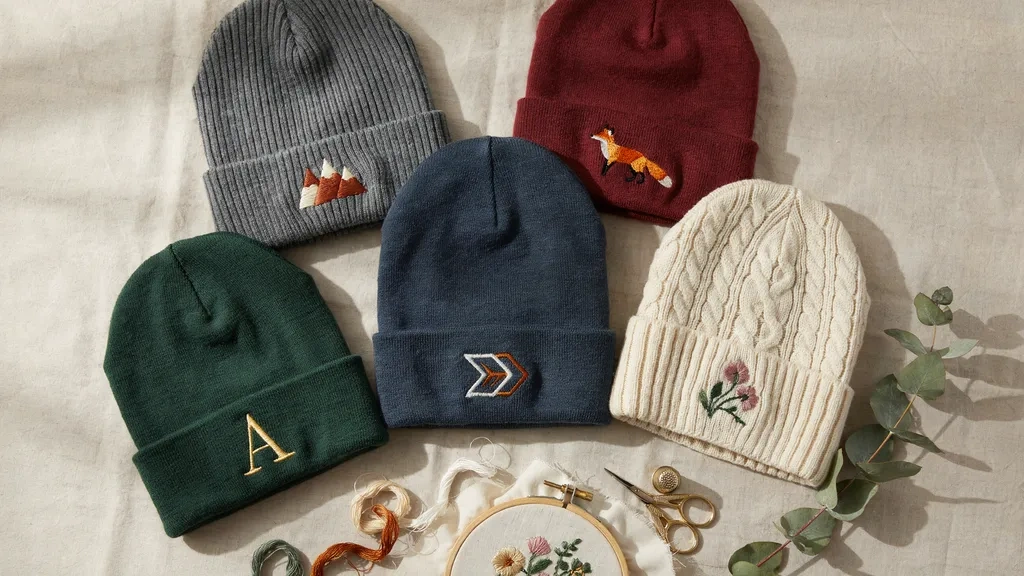
Two or three stitched initials in a clean serif or script font remain one of the most requested beanie embroidery designs, particularly for personalised gifting, bridal party beanies and small batch retail drops.
Logo and Wordmark Embroidery
A brand logo stitched onto the front cuff is the standard corporate approach, and it pairs naturally with a full range of custom beanie caps for uniforms, event merchandise and staff kits. Keep wordmarks to one or two lines so the letters stay legible once stitched at a small scale.
3D Puff Embroidery
Raised foam backed lettering gives streetwear and sports beanies a bold, chunky finish that stands out from a distance. It works best on short, thick lettering rather than fine script or small text.
Patch-Style Embroidery
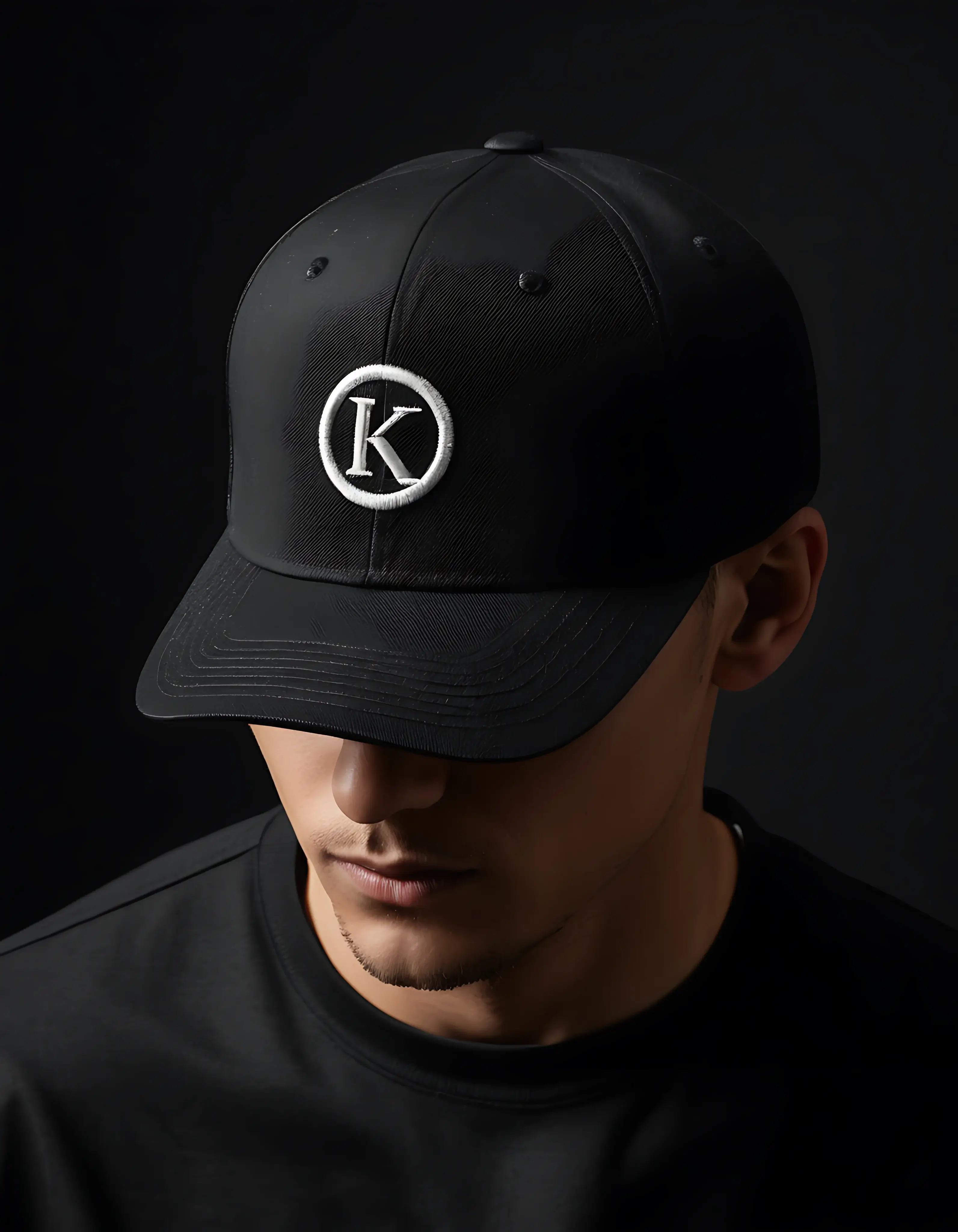
Some brands prefer a badge style panel stitched onto the cuff rather than direct embroidery, which borrows techniques more commonly seen on patch caps, giving the beanie a layered, collectible feel that suits military inspired or heritage branding.
Minimalist Line Art
A single continuous line icon, an animal outline, a mountain range or a simple symbol, stitched in one thread colour, suits fashion focused beanie ranges and keeps production costs low since fewer stitches and colour changes are needed.
Seasonal and Holiday Themes
Snowflakes, small pine trees, stars and festive typography work well for limited edition winter drops and Christmas markets, particularly when paired with a contrasting pom pom or ribbed cuff colour.
Sports Team and Club Designs
Club crests, player numbers and supporter slogans embroidered onto beanies are a reliable matchday merchandise category for football, rugby and running clubs across the UK.
Tonal or Blackout Embroidery
Stitching a design in a thread colour that closely matches the beanie fabric creates a subtle, textured logo that only shows up at certain angles, a look that has grown popular with premium and minimalist streetwear labels.
Choosing Thread and Beanie Fabric for Best Results
Acrylic and wool blend beanies hold embroidery detail well because the knit is dense enough to support stitch density without puckering. Rayon thread gives a glossy finish suited to logos and wordmarks, while matte cotton thread suits minimalist or vintage inspired designs.
For very fine detail, a lower stitch count digitised file prevents the knit from bunching, which is why working with an experienced digitiser matters as much as the design itself.
Beanie Styles Best Suited for Embroidery
| Beanie Style | Embroidery Suitability | Notes |
|---|---|---|
| Cuffed Beanie | Excellent | Wide flat cuff gives the most stitching space |
| Slouchy Beanie | Good | Best for crown placement or all over patterns |
| Ribbed Knit Beanie | Good | Slightly textured surface, works well with bold stitches |
| Pom Pom Beanie | Excellent | Cuff space unaffected by the pom, ideal for retail lines |
Embroidery Cost Factors and Minimum Order Quantities
Pricing for embroidered beanies is driven mainly by stitch count, thread colour changes, and order volume. A simple one colour monogram costs less to produce than a multi colour 3D puff logo, and unit prices drop meaningfully as order quantities increase, which is why most suppliers set tiered pricing bands rather than a flat per unit rate.
- Design complexity: more stitches and colour changes increase set up and run time
- Placement: multiple placements on one beanie add separate embroidery runs
- Order volume: bulk orders reduce the per unit setup cost significantly
- Digitising fee: a one off charge to convert artwork into a stitch file, usually reusable for reorders
How to Order Custom Embroidered Beanies
Ordering embroidered caps or beanies follows a similar process to any other custom caps project, with a few beanie specific checks along the way.
- Share your logo or design idea, along with preferred colours and placement
- Confirm the beanie style, cuffed, slouchy, ribbed or pom pom, and fabric blend
- Review a digital mock up showing stitch placement and thread colours
- Approve a pre production sample for larger orders where accuracy matters most
- Confirm quantity, sizing and delivery timeline before production begins
Common Embroidery Mistakes to Avoid
- Choosing overly detailed artwork that loses clarity once scaled down to cuff size
- Ignoring thread colour contrast against dark or heavily textured beanie fabric
- Skipping a digital mock up, which is one of the simplest ways brands use embroidered caps to increase brand recognition before committing to full production
- Selecting a beanie fabric too thin to support dense stitching without puckering
- Underestimating turnaround time for multi colour or 3D puff designs during peak winter season
Frequently Asked Questions
What is the best embroidery style for a beanie logo?
Flat or satin stitch works best for most beanie logos because it stays legible at small sizes and suits the front cuff placement most brands prefer.
Can embroidery be done on a slouchy or ribbed beanie?
Yes. Slouchy and ribbed beanies both accept embroidery well, though designs are usually kept slightly simpler to account for the textured or looser knit surface.
How many thread colours can be used in one design?
Most beanie embroidery designs use between one and six thread colours. Adding more colours increases production time and cost, so simpler colour palettes are recommended for large orders.
Is 3D puff embroidery suitable for small text?
No. 3D puff embroidery is best reserved for bold, short lettering or simple shapes, since the raised foam backing loses definition on fine or small scale text.
What is the minimum order quantity for embroidered beanies?
Minimum order quantities vary by supplier and design complexity. Smaller custom runs are generally possible, with unit costs decreasing as quantity increases.
How long does custom beanie embroidery take to produce?
Turnaround typically depends on order size and design complexity, with simpler single colour designs moving faster through production than multi colour or 3D puff orders, especially during the winter peak season.
Does embroidery work on both wool and acrylic beanies?
Yes. Both wool blend and acrylic beanies hold embroidery detail well, provided the knit density is firm enough to support the stitch count of the chosen design.
Can I combine embroidery with a patch on the same beanie?
Yes. Many brands combine a small embroidered detail with a woven or embroidered patch on the cuff for a layered look, particularly for heritage or military style branding.
Turn Your Beanie Design Into a Wearable Statement
Embroidery gives custom beanies a finish that survives winter after winter, holds brand detail with precision, and reads as premium the moment someone puts it on. Whether the goal is a subtle monogram, a bold 3D puff logo, or a full patch style panel, the design choices above cover the range of embroidered beanie caps that UK brands, teams and retailers reach for most often.
Getting the stitch type, placement and thread colours right at the planning stage is what separates a beanie that looks good for one season from one that stays in rotation for years.
